


This report explores how to implement the search syndication, web search index, and user-side data sharing remedies ordered by Judge Mehta. In the context of on-going appeals in the case I also recommend potential modifications to the remedies ordered to make them more effective.
The remedies ordered provide some of the inputs required to offer general search services -blue boxes in the diagram below. This leaves plenty of scope for competitors to differentiate and innovate, as they must do, to gain users. Companies that meet the criteria of Qualified Competitors (QCs) will need to be able to mix and match remedies, stagger use, and combine these inputs with their own search infrastructure and other syndication feeds. Mandated license terms for syndication and data sharing remedies should reflect this.
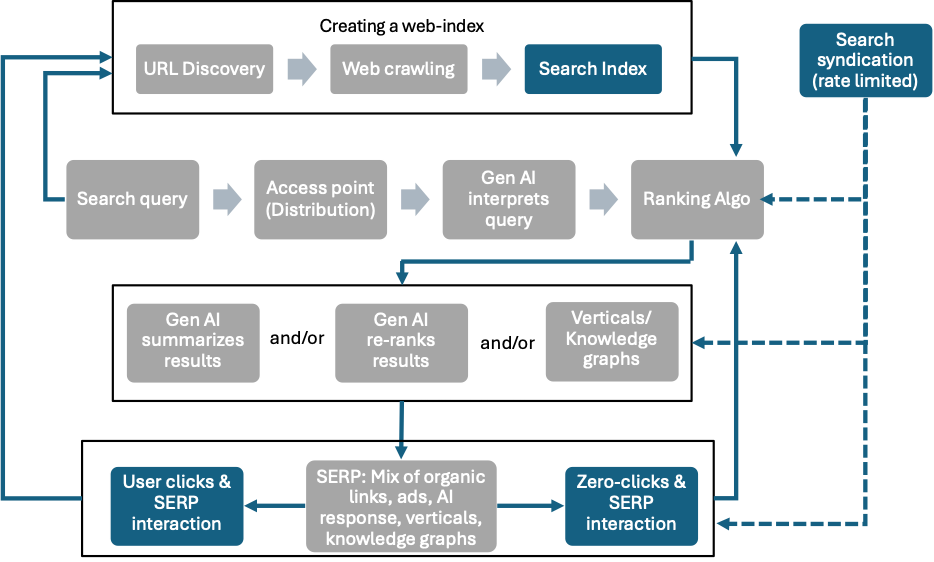
It will require time and substantial investments by QCs to start closing the gap with Google. Despite some important limitations, the remedies ordered could be useful to do this if implemented judiciously. QCs should be consulted and kept informed from the very beginning of the implementation process. This will help QCs plan service rollouts and help the Technical Committee (tasked with implementing the remedies by the court) draw on the expertise and inputs from the wider industry, not just Google.
It may still not be possible for each QC to develop all the components required to offer general search services. For example, most will not be able to develop their own web-search index or search text advertising technology. But this is okay. The aim should be to enable effective competition from companies with different business models and service offerings.
It is Google’s gargantuan scale that allows it to develop and operate its own web search index, search text advertising, and various verticals like Google flights, local business information, and maps. There is no reason for this vertically integrated business model to be the only way general search services are provided.
Specialized vertical providers like Tripadvisor and Yelp, and Gen AI model developers other than Google provide essential inputs for smaller companies to compete in general search. The availability of alternative suppliers of web search indexes and search text advertising can play a similar role and enable sustainable long-term competition via competitors operating a spectrum of business models. The remedies must be implemented to allow for the development of such wholesale services.